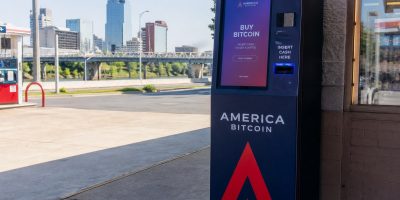
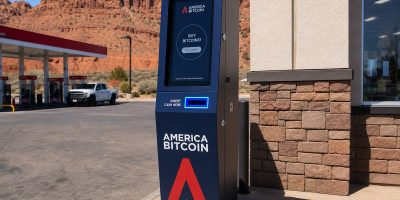
You check Bitcoin’s price on an app — say it reads $60,000 — then you walk up to a machine to buy some with cash, and the price looks higher. It’s a fair thing to notice, and a fair thing to ask about.
Here’s the surprising part: it’s the exact same thing that happens every time you glance at the news, see “oil is at $75 a barrel,” and then pay $3.50 for a gallon at the pump. The number on the screen and the price you actually pay are related — but they were never meant to be the same number.
The reason is market structure: the price you see quoted is a wholesale benchmark, while the price you pay is for a finished product, delivered to a convenient spot near you. Most explanations of oil prices stop at the barrel and skip the part that actually connects it to the pump: refining, distribution, and the retail markup. That missing middle is the whole point — so let’s break it down, and then map it straight onto buying Bitcoin.
First, two different things: an exchange and a retailer
An exchange is an orderbook — a wholesale marketplace
When you see a Bitcoin “spot price,” it usually comes from a crypto exchange. An exchange doesn’t sell you Bitcoin — it matches buyers and sellers on an orderbook. The quoted price is essentially the midpoint between the highest price someone is willing to buy at and the lowest price someone is willing to sell at, at that instant.
To actually transact at that price, you need to be set up as a wholesale participant: an approved account, verified identity, a linked bank account, funds already deposited and cleared, and the patience to wait for transfers and blockchain confirmations. And even then you don’t get the exact headline number — there’s a bid/ask spread, trading fees, and price slippage on larger orders. Think of it as the trading floor, not the store.
A retailer sources the product and brings it to you
A retailer does something different. It buys at wholesale, then does the work to package that product into something you can grab instantly — in small amounts, with cash, at a physical location, with no account and no bank required. That service has real costs, and the retail price reflects them.
The oil supply chain, from crude to the pump
This is the part most explanations skip. Getting oil out of the ground is only the beginning of why gas costs what it does.
1. The benchmark price (WTI and Brent)
“The price of oil” on the news is a wholesale benchmark for a barrel of unrefined crude, traded on commodity exchanges. The two you hear most are WTI (West Texas Intermediate, the U.S. benchmark, priced at a hub in Cushing, Oklahoma) and Brent (the international benchmark). Fun fact: U.S. pump prices actually track Brent more closely than WTI, because gasoline itself is a globally traded product. You can’t show up in Cushing and buy a single gallon at the WTI price — that number is a reference, not a retail offer.
2. Refining (crude isn’t gasoline yet)
Crude oil can’t go in your tank. Refineries convert it into usable, spec-grade gasoline, and they charge for that conversion plus a margin — the industry calls it the “crack spread.” This is why pump prices can climb even on a day when crude is flat or falling: if refining margins widen, your gallon gets more expensive regardless of the barrel.
3. Distribution and logistics
Finished fuel then has to physically move — through pipelines, into storage terminals, and onto tanker trucks that deliver to thousands of individual stations. That’s infrastructure, labor, and fuel spent to move fuel.
4. The retail station
Finally, your corner station pays rent, staff, electricity for 24/7 lights and pumps, card-processing fees, permits, and local taxes — and in some states, cleaner-burning fuel blends that simply cost more to make. Ironically, stations often earn thin margins on the fuel itself. The pump price is mostly everything that happened upstream.
So how does a $1.79 gallon of crude cost $3.50 at the pump?
Here’s the math with round numbers. At $75 for a 42-gallon barrel, the crude in one gallon of gas costs about $1.79 ($75 ÷ 42). So why do you hand over closer to $3.50 at the pump — nearly double? Because crude is only about half the price. Everything else is what it takes to turn that barrel into a gallon you can pump into your car, on demand, at a station down the street. Using the U.S. Energy Information Administration‘s 2016–2025 average shares, here’s where each dollar goes:
| What you’re paying for in a gallon of gas | Average share | Per gallon at ~$75/barrel |
|---|---|---|
| Crude oil (the “benchmark” price you see on the news) | ~52% | ~$1.79 |
| Refining costs & profits (the crack spread) | ~15% | ~$0.52 |
| Distribution & marketing (pipelines, trucks, stations) | ~16% | ~$0.55 |
| Federal & state taxes | ~17% | ~$0.60 |
| What you actually pay at the pump | 100% | ~$3.46 |
That’s the answer to “how did it double?” The crude is only the first half. The other half is refining, the pipelines and trucks that move the fuel, the tanks and pumps at the station, insurance and bonding, and taxes. (Actual pump prices vary by region and season — these figures use EIA average shares to show the shape of it.)
So the “price of oil” and the price at the pump are both real — they’re just measuring two different points in the same supply chain.
Now, the same supply chain — for Bitcoin
Buying Bitcoin in person has a supply chain too. It’s less visible than pipelines and refineries, but every stage is there, and each one maps cleanly onto oil:
| Oil supply chain | Bitcoin retail supply chain |
|---|---|
| Crude benchmark (WTI/Brent) traded on a commodity exchange | Bitcoin spot price on a crypto exchange orderbook |
| Refining crude into usable, ready-to-pump gasoline (the crack spread) | Converting large exchange liquidity into small, instant, cash-sized amounts — and locking your price the moment you insert cash, even though the market moves every second |
| Physical equipment: underground tanks, pumps, and canopy — a major upfront capital investment per station | Physical equipment: the Bitcoin ATM itself — kiosk, cash acceptor/dispenser, and connectivity, roughly $5,000–$15,000+ per machine |
| Pipelines, terminals, tanker trucks that move the fuel | Cash logistics (armored pickup, vaulted storage) plus Bitcoin treasury and on-chain settlement |
| The retail location: rent, staff, utilities, 24/7 access, permits | The host location: rent or revenue share, uptime and maintenance, and real-person phone support |
| Insurance & bonding: station liability plus environmental and underground-storage-tank coverage | Insurance & bonding: the surety bonds required to hold money-transmitter licenses, plus commercial insurance |
| Fuel taxes & mandated blends | Licensing & compliance: state money-transmitter licenses, identity verification, and Bank Secrecy Act / anti-money-laundering programs — the cost of running a regulated service |
Two of those stages are worth pausing on, because they’re where most of the “why is it more?” actually lives.
The orderbook stage. To buy at or near the exchange spot price, you have to become a wholesale participant: create an account, verify your identity, link and fund a bank account, wait for it to clear, place your order, then wait for withdrawal and network confirmations. A retailer collapses all of that into: walk up, insert cash, and Bitcoin lands in your wallet in minutes — no account, no bank, no waiting.
The refining stage. This is the one people miss. When you hand over cash, the operator commits to your price instantly and delivers the coin immediately — even though its own supply is sourced and hedged on exchanges where the price is moving constantly, and even though Bitcoin transactions can’t be reversed once sent. Turning a fast-moving wholesale market into a fixed, instant, cash price in your hand is a real service, just like turning raw crude into something you can actually burn in your engine today.
So which one is right for you?
Neither price is the “real” price and neither channel is the “right” one — they serve different needs. Being honest about that is the whole point.
A retailer or Bitcoin ATM tends to make sense when:
- You want to pay with cash, or you don’t have a bank account you can (or want to) link.
- You need Bitcoin right now and can’t wait days for an account to set up and transfers to clear.
- You’re buying a smaller amount, where the dollar difference is modest and the convenience is worth it.
- You value being able to call a real person and use a physical location near you.
An online exchange tends to make sense when:
- You’re making large or recurring buys, where a percentage difference adds up quickly over time.
- You’re comfortable online and don’t mind linking a bank account and verifying it.
- You can wait out the setup, verification, and transfer times to save on cost.
Wherever you land, you should always be able to see the full price before you commit. Our machines show you the total cost — including any exchange-rate spread — before you confirm, and your receipt breaks it down. If you want the exact numbers, we lay them out in Bitcoin ATM Fees Explained: What You’ll Actually Pay, and we walk through the full cost of operating physical machines in Why Bitcoin ATM Fees Are Higher Than Online Exchanges.
The bottom line
The exchange spot price is Bitcoin’s WTI — a wholesale benchmark, not the delivered retail price. Just like crude oil, a lot happens between that benchmark and the moment a finished, convenient product is ready for you: sourcing liquidity, absorbing price risk, moving cash under armored transport, running licensed and compliant machines, and putting instant access on a shelf in your neighborhood.
Whether that convenience is worth the retail markup is your call — and it’s a call you can only make when someone shows you the numbers. That’s the part we take seriously: no hidden spread, no surprises after you’ve started. Just the price, up front, so you can decide what’s right for you.
Find a Bitcoin ATM near you
See current rates and buy or sell Bitcoin with cash at a convenient location.
Gasoline price-composition figures via the U.S. Energy Information Administration. This article is for educational purposes and is not financial advice.